




Explore Northern Kenya’s unique tribes and landscapes.
Day 1: NAIROBI - SAMBURU
We will leave Nairobi and head toward the Samburu National Reserve, located in northern Kenya, in the heart of the Samburu ethnic group. Although it will be a long journey, it is interesting to observe how the landscape changes as we travel through Kenya.
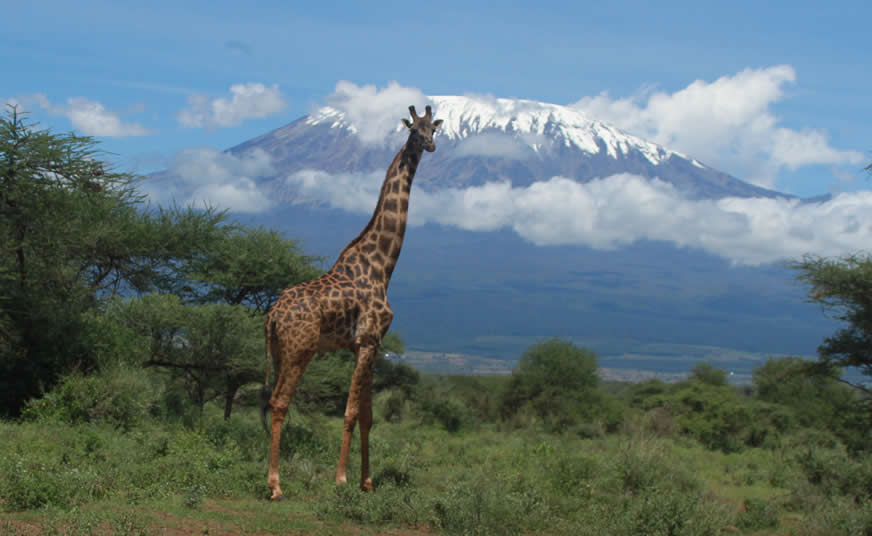
Safari at Samburu National Reserve. It is a wild and scenic reserve in northern Kenya, known for its rugged landscapes and unique wildlife. Located along the Ewaso Ng'iro River, it's home to rare species like the "Samburu Special Five": Grevy's zebra, Somali ostrich, reticulated giraffe, gerenuk, and Beisa oryx.
The park offers excellent game drives, cultural encounters with the Samburu people, and stunning views of arid plains, acacia forests, and riverine ecosystems. Elephants, lions, and leopards are also commonly spotted.
Day 2: SAMBURU — NGURUNIT (RENDILLE)
We will continue our journey until we reach the village of Ngurunit. This settlement is located at the base of Mount Ndotto, in a cold and mountainous environment, composed of impressive rock walls and some springs.
Here, we will meet and immerse ourselves in the culture of the Rendille people, nomadic pastoralists whose way of life has remained virtually unchanged for centuries. Their vibrant traditional attire, intricate social structures, and remarkable ability to thrive in this harsh environment are truly awe-inspiring.
We will be looking for the best spots among the rocky terrain to photograph this amazing group in their traditional attire. A nearby beautiful natural area to visit is the rock pools, a place where locals and tourists alike can have an amazing experience sliding down the water slides. For whose who prefer a more relaxed time, a nice swim will do.
Day 3: NGURUNIT (RENDILLE) — NORTH HORR
After the breakfast, we will take a walk through the village where the Rendille and Samburu ethnic groups coexist. This will be our first encounter with the tribal communities, and time permitting, we will meet and get acquainted with them.
The Rendille are inhabitants of the arid lands of northern Kenya, a nomadic people whose subsistence depends mainly on the products obtained from their herds of camels and goats.
The fine facial features, characteristic of the Cushitic groups, distinguish the Rendille from the Nilotic and Bantu peoples of Africa. Linguistically, their closest connection is with Somali. Culturally, they share similarities in ceremonies with the Gabra, another related ethnic group.
In the afternoon, we visit the Gabra tribe.
Day 4: NORTH HORR – LOIYANGALANI (TURKANA)
After early breakfast, we will depart to reach Loiyangalani on the shores of Lake Turkana. From North Horr to Loiyangalaniit’s a three-hour ride, leaving time to reach the lake by sunset. If light and time allows, we can have our first photo session with the Turkana.
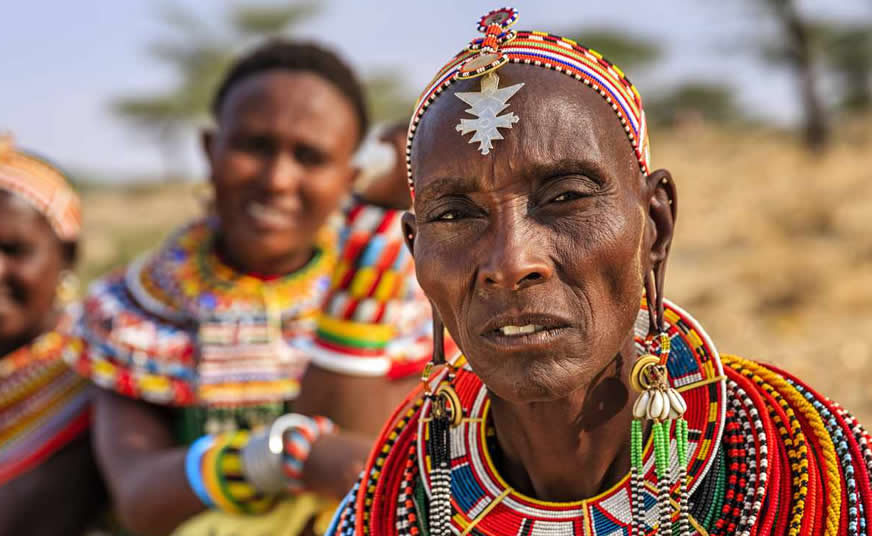
The Turkana are perhaps the most iconic group of the area. Their beautiful enormous beaded necklaces worn by their women will fascinate us. They are also Nilotic semi-nomadic pastoralists, though due to many factors, they also rely now on fishing on the lake. This is a very rash area, and the Turkana are really a type of people used to enduring adversity. This is visible in their fierce looks. But contrary to what they look like, meeting the Turkana is an experience in itself.
Day 5: LOIYANGALANI (TURKANA AND EL MOLO)
Before sunrise, we will prepare to explore one of the El Molo settlements and sail to Roto Island, a sacred enclave for this ethnic group. The El Molo is divided into two main settlements: the Laieni and Komote villages, and on Roto Island are the Gantes shrines. These shrines symbolize the seven clans of the ethnic group, each with its own specific purpose.
Marle: Used in ceremonies, curses to enemies, prayers for rain and protection against snakes.
Orikala: Intended for sacrifices to improve luck in hippopotamus hunting.
Origaltite: Offers blessings to infertile women to conceive.
Orisole: Prayers for protection from diseases and disturbances in the community.
These shrines not only represent significant rituals for the El Molo clans, but also reflect their deep connection to nature and their deep-rooted beliefs in protection and fertility.
Later, we will return to the hotel for breakfast and drive to the Desert Museum. Located on a hilltop, with the picturesque Lake Turkana as a backdrop, the Loiyangalani Desert Museum opened its doors in June 2008. This museum focuses on portraying the lives of the six fascinating communities that inhabit the area: Turkana, El Molo, Rendille, Samburu, Gabra and Dassanech.
Transfer to the hotel for lunch and rest. In the afternoon we will visit one of the Turkana villages near the lake. Sunset photo session by the lake.
Day 6: LOIYANGALANI — SOUTH HORR (SAMBURU)
After breakfast, we will start our journey to South Horr. As we move away from Lake Turkana, the landscape transforms, introducing us to the territory of the Samburu ethnic group.
Our camp will be set up in the valley of the Samburu's sacred mountain, Ol Doinyo Nyiro. This 2,752-metre high volcanic massif is considered to be the spiritual centre. Historically, this ethnic group has practiced nomadic cattle herding in an arid environment, stretching from Mount Kulal to the south of the Samburu Reserve.
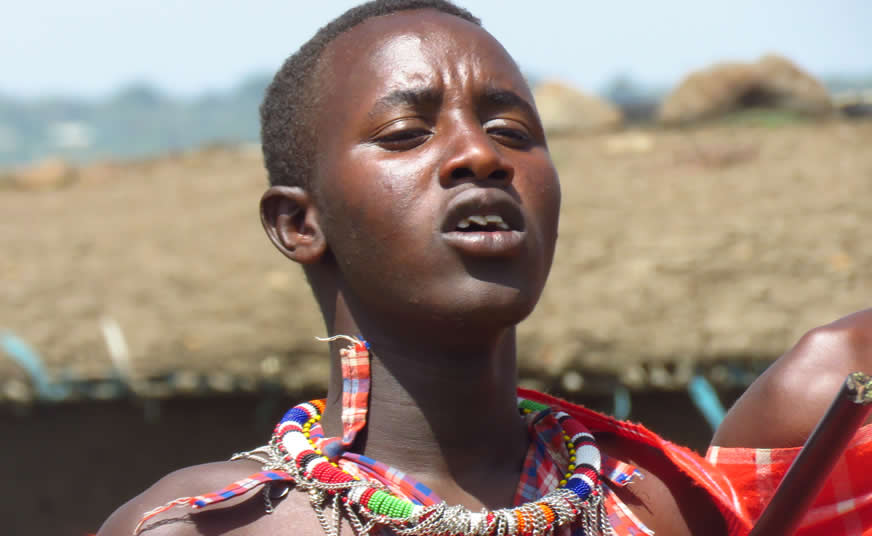
The Samburu, known for their hospitality, will welcome us in their villages. The women, in particular, will showcase their beautiful beaded jewelry, while the young men, known as “morans”, willdisplay impressive aesthetics and decorations.
The afternoon will be spent exploring the interesting Samburu villages around South Horr looking for the best spots to capture their daily life.
Day 7: SOUTH HORR - CHURO
In the morning, we will head to Churo to visit Pokot community. This ethnic group extends from the plains of eastern Uganda to the highlands of northwestern Kenya, eventually encompassing the plains surrounding Lake Baringo.
The traditional architecture of Pokot dwellings is unique and they are usually circular constructions with mud walls and roofs of vegetable materials. In semi-nomadic areas, the Pokot erect lightweight huts using sticks, straws and mats, giving them the mobility needed to forage for fresh pasture.
It is interesting to note how these women, especially married women, adorn their attire with metal necklaces and earrings that include intricate designs, indicating their marital status. This rich attire is not only aesthetically beautiful, but also reflects the deep-rooted cultural and social identity of Pokot women.
Pokot are famous in their pastoral traditions: a distinct cattle cult that shapes the entire way of life.
We will camp in a Pokot village, immersing ourselves in their daily life and allowing us to appreciate their rich cultural heritage. Depending on our time of arrival, we will enjoy their welcoming dances.
Day 8: CHURO - NAIROBI
We will wake up in a unique scenery to later travel to Nairobi for lunch at a local restaurant on the way or at Nairobi itself (not included).
Free afternoon. Farewell dinner to round off our trip.
Route Map

Featured Hotels

Elephant Watch Camp

Sarova Shaba Lodge

Elephant Bedroom
Larsens Tented Camp

Saruni Samburu

Samburu Sopa Lodge

Samburu Simba Lodge
Ashnil Camp
Elephant Watch Camp | samburu
Elephant Watch Camp is superbly decorated with extraordinary colours and fabrics and sits on the sand banks of the Ewaso Nyiro River. Hosted and owned by Oria Douglas Hamilton, the camp is very much geared towards elephant research and conservation, and is closely related with save the Elephants, Oria`s husband Iain`s organization – each are famous for his or her pioneering paintings with conservation during East Africa.
Elephant Watch Camp is absolutely eco-friendly, and maintains a very low footprint at the surroundings – there`s no waste, no pollutants, no noise. Tents here are colorful and comfy, with bathrooms constructed around trees, giving guests a completely unique showering revel in.
Every of Elephant Watch`s specialised guide understand all the elephant families households by means of name and character, making for an sincerely specific and magical elephant experience. The Samburu warriors will also take visitors on bush walks alongside properly trampled elephant paths, collecting medicinal plant life or honey as you pass. once in a while you may witness the fantastic river crossings of the Samburu`s camels and livestock, and see the proper culture of this stunning nomadic tribe.
Sarova Shaba Lodge | samburu
Sarova Shaba Game Lodge is located in a natural oasis in the heart of the Shaba Game Reserve just east of Samburu, or one can say, in the "Born Free Country" that Joy and George Adamson called home for many years.
It is set along the bank of the Ewaso Nyiro River laid out around the natural springs that flow into the river. The Lodge has a virtual mini forest of indigenous trees, a fish pond and a large free form swimming pool.
Sarova Shaba Game Lodge has one tastefully furnished presidential suite that also encapsulates the Samburu culture in its interior décor. Situated amongst natural springs and lily pools, the suite is a stand-alone unit with a large bedroom, living and dining area and a vast bathroom with a private Jacuzzi. This suite embodies the history of Joy Adamson and is named the "Born Free Suite".

Joys Camp | samburu
A stylish oasis inside the extraordinary arid landscapes of Samburu, Joy`s Camp is built on the site of Joy Adamson`s tented home in Shaba National Reserve. The camp overlooks a huge natural spring where in Elephant and Lion jostle for watering rights with herds of Buffalo and the rare desert species of Beisa Oryx, Reticulated Giraffe and Grevy`s zebra.
The corner in the eastern side of the Samburu eco-system, Shaba is a secluded idyll, which Joy`s Camp visitors can experience as a private experience, out of the hustle and bustle of Samburu – an arid panorama dotted with lush springs and Rocky River gorges, home of the special wildlife.
Every tent is uniquely embellished with homemade glass and the colourful fabrics of the neighbourhood nomadic tribes growing a chic, state-of-the-art and elegant camp. Each tent has its own private veranda, ideal for game viewing, in addition to relaxing, reading and absorbing the absolutely wild environs provided by Shaba.
Elephant Bedroom | samburu
Elephant Bedroom is a small and exclusive, luxury safari camp is located in Samburu National Reserve on the banks of the Ewaso Nyiro River. The camp has a lovely setting amongst the many varieties of indigenous trees and shrubs. The luxury tents and attractive public areas including elegant lounge and dining tents. Elephant Bedroom Camp provides the perfect accommodation for any Samburu safari. Guests are truly at one with nature as the camp is regularly visited by elephant and game which shelter under the trees.
The guest tents are each set on a raised wooden deck with a small plunge pool ideal for cooling down after a morning on safari. Each tent has either one king-size double bed or twin queen-size beds as well as a sofa, coffee table, dressing table and attractive soft furnishings. All tents have electricity and en suite facilities.
Larsens Tented Camp | samburu
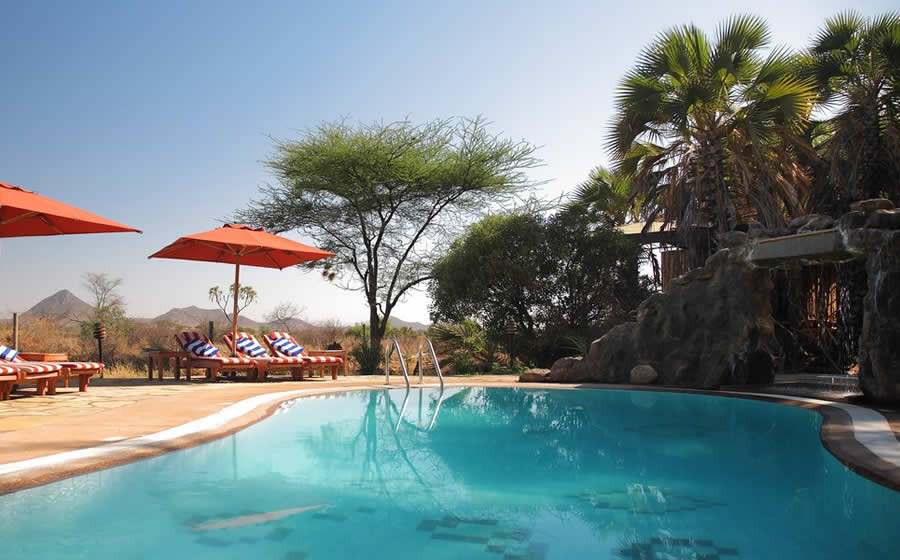
Set in a rugged landscape with a backdrop of jagged mountains, Samburu National Reserve is host to indigenous animals unique to the region. Explore the reserve from the luxurious, five star Larsens Camp, named after the famous adventurer Eric Larsen and built in the exact place the explorer first camped.
Each exclusive tent is secluded and private, the perfect place to be lulled to sleep by the sound of the Ewaso Nyiro river during the Kenyan night. Facing the river and shaded by palm trees you can watch the sun rise from the porch of your tent. it has a spacious king bed, porch and an ensuite bathroom with authentic furniture and decorations take you back to the experiences of the early pioneers.
At Larsens we do not let anything get in the way. Watch elephants wade in the river and giraffes meander along the opposite bank while you dine alfresco.
Saruni Samburu | samburu
Perched on a spectacular viewpoint, its six luxury villas are open and spacious, heralding spectacular views over Kenya’s Northern Frontier District and Mount Kenya in the distance. Each villa is very private with zip fronted canvas, and large lounge areas, indoor baths and outdoor showers.
Guests can enjoy the vast panoramas from the dining and lounge area, the two infinity pools and the Samburu Wellbeing Space. Nearby there is a ground-level photographic hide next to a waterhole where the famous Samburu SPECIAL FIVE gather to drink. The lodge is admired for its innovative, eco-chic architecture and interesting design and décor, as well as its Italian-inspired cuisine.
Samburu Sopa Lodge | samburu
Samburu Sopa lodge is built atop high ground allowing panaromic views of the vastness of Samburu shrub land and the hills beyond. The lodge is built to reflect the architectural heritage of the local communities whose sons and daughters make up the majority of the work force at the lodge.
The cottages are built in an arch formation on either side of the public areas to surround the waterhole but leaving a wide gap to allow the animals free movement to the water. Also follow the exterior design of centuries-old, traditional Samburu housing, but the similarity stops there. Instead, the structures have much higher ceilings; far larger windows; much more floor space and en suite bathrooms.
All our well-spaced cottages have two airy and comfortable, tastefully furnished guest rooms, each with two queen size beds; a large dressing table; a lavishly appointed bathroom.
Samburu Simba Lodge | samburu
Ashnil Camp | samburu
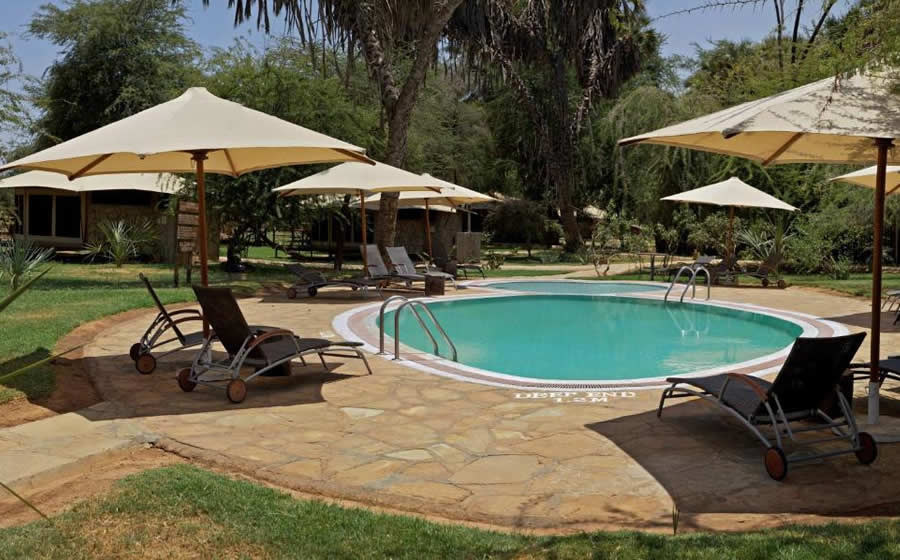
Ashnil Samburu Camp is a luxury tented set in the spectacular backdrop drop of the Mighty Ol Olokwe mountain fronting Ewaso Nyiro River. The luxury Tents are spread out along the shady banks of the river under a thick stand of doum Palms.
It features an outdoor swimming pool surrounded by sun lounges, a garden and a Lounge bar offering views of the African savannah. Each tent features a decked Terrance with views of the Ewaso Nyiro River. The restaurant offers views of the river and serves a variety of menus comprising of Oriental, traditional and international cuisines.
Included
- Full-board accommodation at safari camps/lodges.
- Park entrance fees and game drives with professional guides.
- Ground transportation in a private 4x4 safari vehicle.
- Airport transfers on arrival and departure.
Excluded
- International flights.
- Personal expenses.
- Optional activities like balloon safaris.